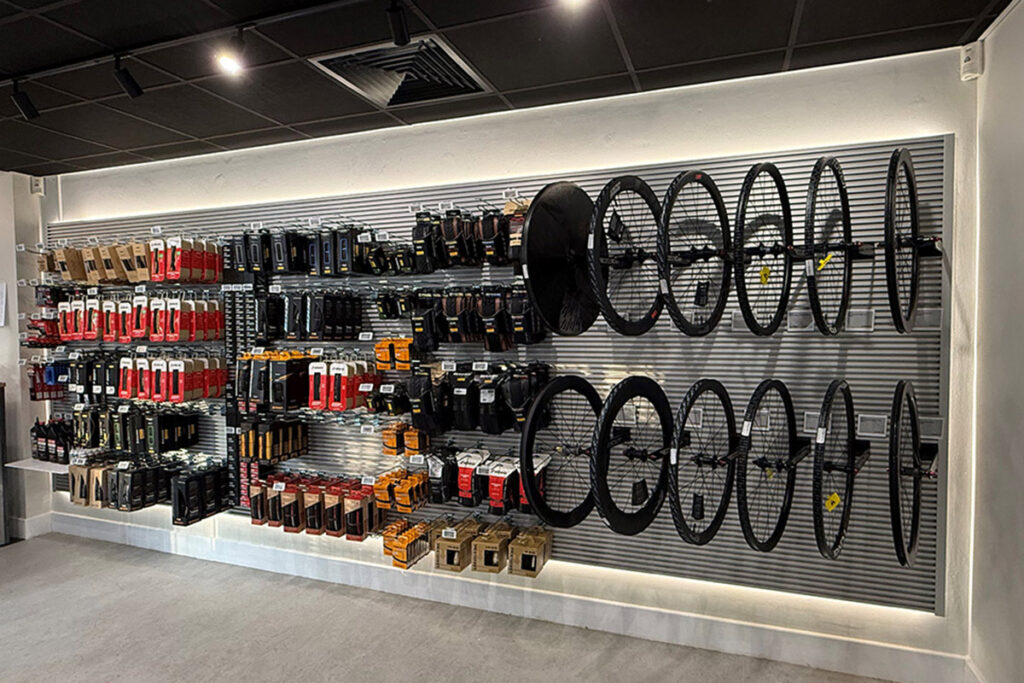
Modern garages have evolved into multifunctional workspaces, storage areas and hobby environments. Garage slatwall panels help transform cluttered spaces into organized workzones by combining flexible wall storage, efficient organization and modern design in one modular solution. From tools and sports equipment to detailing products and gardening accessories, slatwall systems create cleaner, more functional and visually balanced garage interiors.
In this blog:
Garage slatwall panels are modular wall mounted storage systems designed to organize tools, equipment and accessories efficiently. The panels feature horizontal grooves that support a wide range of hooks, shelves, baskets and storage holders.
Unlike traditional shelving or fixed storage systems, slatwall panels allow users to adjust and reorganize their layout whenever needed without drilling additional holes into the wall.
Garage slatwall systems are commonly used for tool storage, sports equipment, gardening accessories, workshop organization and utility room storage. Because the system is modular, it can easily adapt as storage needs change over time.
Garages often become one of the busiest and most multifunctional areas in a home. Tools, seasonal equipment, sports gear and household supplies are frequently stored together in one limited space.
Without an organized storage system, clutter quickly builds up on floors, workbenches and shelves. This reduces available workspace and can make garages feel chaotic, crowded and inefficient.
Common causes of garage clutter include limited storage space, overloaded shelving, inefficient floor storage and a lack of flexible wall organization systems. An organized garage starts with maximizing unused wall space rather than relying entirely on floor-based storage.
Garage slatwall panels create a structured and flexible storage system that keeps tools and accessories visible, accessible and organized.
Instead of stacking items in cabinets or placing them on the floor, slatwall systems allow users to organize equipment vertically along the wall. This creates cleaner layouts and improves the overall appearance of the garage.
A well designed slatwall setup can transform cluttered garage walls into visually organized workspaces that feel more professional and easier to use.
Key advantages include:
Because accessories can be repositioned easily, the layout remains flexible for changing tools, projects and storage requirements.
One of the biggest advantages of slatwall systems is vertical storage optimization. Garage floors are often crowded with storage bins, tools and equipment. By moving storage onto the walls, more usable floor space becomes available for vehicles, workstations or movement throughout the space.
Vertical wall storage helps reduce floor clutter, improve workflow and create safer work environments while keeping tools within easy reach. For workshops and active workzones, efficient wall organization can significantly improve daily functionality and productivity.
Garage slatwall panels support a wide range of modular storage accessories designed for different types of tools and equipment.
Popular accessories include:
These accessories are ideal for organizing power tools, extension cables, helmets, detailing products, ladders and gardening equipment.
Because the system is modular, accessories can be rearranged quickly without damaging the wall surface. This flexibility allows homeowners and professionals to customize their garage layout based on changing storage needs.
Durability is an important factor in garage environments where temperature fluctuations, dust and moisture are common. High quality garage slatwall panels are designed to withstand demanding conditions while maintaining long term performance and appearance.
Many premium systems offer moisture resistant surfaces, scratch resistant finishes, impact resistant materials and easy to clean surfaces with high load capacities. Some advanced slatwall systems also include aluminium inserts that increase strength and support heavier storage loads. This makes them suitable for both residential garages and professional workshop environments.
An organized workspace helps reduce distractions and improve efficiency during daily tasks and projects. When tools and equipment are clearly visible and easy to access, users spend less time searching and more time working productively.
Garage slatwall systems support efficient workspaces by:
For workshops and hobby spaces, this creates a more functional, comfortable and enjoyable working environment.
Garage slatwall panels are suitable for a wide range of garage layouts and multifunctional spaces. They work especially well in home workshops, hobby garages, utility rooms and multifunctional garage spaces. Car enthusiasts, cyclists and DIY users benefit from organized storage for tools, accessories and sports equipment, while utility areas become easier to maintain with efficient wall mounted storage. As garages continue evolving into multifunctional environments, flexible storage systems become increasingly valuable.
Garage design has evolved significantly in recent years. More homeowners now view garages as extensions of the home rather than simple storage areas.
Modern garage interiors focus on:
Showroom inspired garages and minimalist storage layouts have become increasingly popular among homeowners looking for cleaner and more visually balanced spaces.
Slatwall panels contribute to this modern approach by combining practical storage with a clean and organized appearance. The result is a garage space that feels more efficient, visually structured and easier to maintain.
What are garage slatwall panels used for?
Garage slatwall panels are used to organize tools, equipment and accessories through modular wall mounted storage systems.
Why is wall mounted garage storage more efficient?
Wall mounted storage helps maximize floor space, improve organization and create safer and cleaner workspaces.
Are slatwall systems adjustable?
Yes. Slatwall systems are modular and allow hooks, shelves and accessories to be repositioned easily.
Are garage slatwall panels moisture resistant?
Many high quality slatwall systems are designed to resist moisture, scratches and impact damage.
Which garages benefit most from slatwall systems?
Slatwall panels work well in workshops, hobby garages, utility rooms and multifunctional garage spaces.
A well-organized garage creates more than additional storage alone. It improves efficiency, safety and overall usability while supporting a cleaner and more professional environment.
Garage slatwall panels help transform cluttered walls into flexible storage systems that combine organization, durability and modern design. Whether used in workshops, hobby garages or multifunctional spaces, modular wall storage offers a practical and future ready solution for creating organized and efficient workzones.
Explore the Microslat custom solutions for customizable wall mounted storage systems and modular garage organization solutions.
Modern commercial interiors require more than visual appeal alone. Large scale projects demand smart interior systems that combine acoustics, sustainability, technical performance and efficient installation in one integrated solution. In this blog, Microslat explores how commercial interior systems help architects, developers and contractors create flexible, future ready environments for offices, hospitality, retail and public spaces.
In this blog:
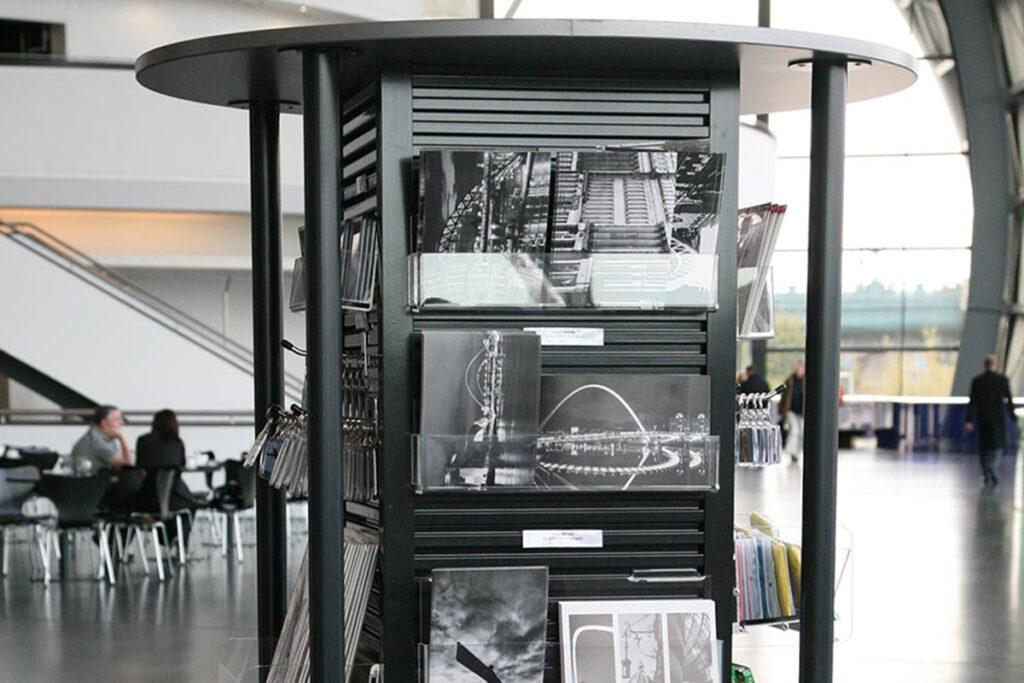
Commercial system solutions are integrated interior systems designed to improve efficiency, flexibility and performance in large scale commercial projects. These solutions include acoustic wall panels, wooden slat systems, ceiling systems and modular architectural finishes for offices, hotels, retail environments, educational facilities and public buildings.
Modern commercial interiors require more than visual appeal alone. Interior systems must also support acoustic comfort, sustainability, technical compliance and long-term usability.
By combining design, engineering, production and installation into one coordinated process, modular interior systems reduce complexity and improve project execution from concept to completion.
Large commercial interiors often involve multiple stakeholders, strict deadlines and thousands of square metres of functional space. Without a structured system approach, projects can quickly become inefficient and difficult to manage. Modular interior systems simplify this process by standardising key components while maintaining design flexibility.
This offers major advantages:
For developers, contractors and architects, this means more control over timelines, budgets and final project quality. In large hospitality and office projects, prefabricated interior systems can significantly reduce on site installation time compared to traditional construction methods.
Commercial interior systems are used in a wide range of industries where durability, comfort and design consistency are essential.
Offices and hybrid workspaces
Modern workplaces require flexible environments that support collaboration, focus and employee wellbeing. Acoustic wall systems and wooden ceiling solutions help reduce noise levels while creating warm and visually balanced interiors. As hybrid working continues to shape office design, adaptable layouts have become increasingly important.
Hospitality and hotels
Hotels require interior systems that combine premium aesthetics with long term durability and efficient installation. In high traffic hospitality environments, acoustic comfort plays a major role in guest experience. Wooden slat wall systems and acoustic ceiling panels help create calm and refined interiors while supporting sound absorption.
Education and healthcare
Educational and healthcare environments require durable, hygienic and low maintenance materials that can withstand intensive daily use. Acoustic performance is especially important in classrooms, waiting areas and healthcare facilities where concentration, communication and comfort are essential.
Retail and public spaces
Retail stores, airports, showrooms and public buildings frequently update layouts and visitor experiences. Modular interior systems allow spaces to evolve efficiently without requiring complete renovations or extensive downtime.
Traditional interior construction often involves extensive on-site modifications, which increases labour costs and the risk of delays. Prefabricated interior systems streamline this process by manufacturing key components in controlled production environments before delivery to site.
This approach improves:
For large scale projects, this can reduce installation time considerably while minimising disruption on site. Prefabricated systems also improve coordination between architects, contractors and installers by ensuring precise integration between interior elements and technical building systems.
Acoustics have become one of the most important aspects of modern interior architecture.Poor acoustic conditions can negatively affect concentration, productivity, communication and overall wellbeing. In busy commercial environments, excessive noise often leads to stress and reduced user comfort. Research consistently shows that workplace acoustics directly influence employee satisfaction and productivity.
This is why architects and developers increasingly invest in acoustic interior systems such as:
At Microslat, acoustic performance is combined with architectural aesthetics to create environments that feel both functional and refined. Wooden slat systems not only improve sound absorption but also add warmth, rhythm and natural texture to commercial interiors.
Sustainability is now a central requirement in commercial interior architecture.
Businesses and developers increasingly seek interior systems that support circular construction principles and reduce environmental impact throughout the building lifecycle.
Sustainable interior systems contribute through:
Modular systems are particularly valuable because individual components can be replaced or adapted without removing entire interior structures.
This extends the lifespan of commercial interiors while reducing renovation waste and long-term operational costs. Natural materials such as wood also contribute to healthier and more visually comfortable indoor environments.
Commercial interiors must perform reliably under intensive daily use while complying with strict technical standards. For architects and project developers, technical performance is a critical part of the specification process.
Fire safety compliance
Commercial interior materials are often required to meet strict international fire safety standards and performance classifications.
Acoustic performance ratings
Professional acoustic systems are tested for sound absorption and reverberation control to ensure measurable acoustic improvements.
Durability and wear resistance
Interior systems used in public and commercial spaces must withstand continuous use while maintaining their appearance and structural quality.
Integration with building systems
Modern commercial interiors increasingly require seamless integration with lighting, HVAC systems and smart building technologies.
At Microslat, interior systems are developed with both architectural quality and technical reliability in mind.
A turnkey interior project is managed through one integrated process from concept development to final installation.
This typically includes:
A turnkey approach reduces communication issues between suppliers and improves efficiency throughout the project lifecycle. For international and large-scale projects, this creates greater consistency, reliability and cost control.
Architects require systems that combine creative freedom with technical precision and scalability. Custom interior systems allow designers to create visually distinctive environments while maintaining practical performance standards.
Key advantages include:
Wooden slat systems are especially popular in commercial architecture because they combine natural aesthetics with acoustic functionality and durable performance. For architects, this creates greater freedom to design spaces that feel both visually sophisticated and technically refined.
Commercial interiors continue to evolve as workplaces, hospitality environments and public buildings adapt to changing user expectations.
Hybrid workplace design
Offices increasingly function as collaborative environments rather than traditional desk-based workplaces.
Biophilic design
Natural materials, wood textures and organic forms are used to improve wellbeing and create more human centred environments.
Smart building integration
Interior systems are increasingly integrated with intelligent lighting, climate control and building management systems.
Prefabricated interior construction
Offsite production continues to grow as developers seek faster and more efficient construction processes.
Circular interior design
Commercial interiors are increasingly designed for adaptability, reuse and long-term sustainability.
What is a commercial system solution?
A commercial system solution is an integrated interior system designed for large scale commercial projects. Examples include acoustic wall systems, ceiling systems and modular architectural finishes.
Why do companies choose modular interior systems?
Modular systems offer faster installation, flexible layouts, reduced maintenance costs and more efficient project management.
What are the benefits of acoustic wall panels?
Acoustic wall panels improve sound absorption, reduce reverberation and create more comfortable environments for users.
Which industries use commercial interior systems?
These systems are widely used in offices, hospitality, healthcare, education, retail and public buildings.
How sustainable are modular interior systems?
Many systems are designed according to circular construction principles and use sustainable, reusable and low maintenance materials.
Microslat develops architectural interior systems that combine acoustics, aesthetics and technical performance for commercial environments.
By working closely with architects, developers and contractors, Microslat helps create scalable interior solutions tailored to the needs of each project.
Microslat systems combine:
From hospitality interiors and office environments to public buildings and commercial spaces, Microslat delivers interior systems that support both visual impact and functional performance.
Whether the goal is acoustic comfort, architectural consistency or sustainable project execution, Microslat provides solutions designed for modern commercial architecture.
Modern commercial interiors require more than aesthetics alone. Large scale projects demand flexible interior systems that combine acoustic performance, sustainability and technical reliability in one integrated solution. Microslat supports architects, developers and contractors with high quality architectural systems designed to deliver comfort, performance and long-term value in modern commercial spaces. Curious how commercial interior systems can improve the efficiency, acoustics and sustainability of your next project?
The way buildings are used is changing. Offices are reorganized more frequently, retail environments adapt to seasonal collections and brand updates, and public spaces must accommodate different functions over time. As a result, interior architecture increasingly requires solutions that can evolve without structural modifications.
Traditional wall systems and fixed interior elements often limit this flexibility. Adjusting them usually involves construction work, demolition, or complete redesigns. This process takes time, increases costs, and generates unnecessary waste.
Modular panel systems offer a different approach. Instead of permanent installations, architects can design spaces using adaptable components that can be reconfigured when requirements change. With modular wall panels from MicroSlat™, interiors can be reorganised without structural interventions while maintaining a consistent architectural concept.
In this blog:

Flexible layouts
One of the main advantages of modular systems is their ability to adapt to changing spatial needs. Walls and display surfaces can be repositioned or expanded without structural intervention.
For example, a retail space may reorganize product categories several times per year. With a modular system, this can be done by adjusting the configuration of panels and accessories rather than rebuilding the interior.
Architects can therefore design spaces that remain functional even when the use of the space evolves.
Fast installation
Modular systems are typically prefabricated and assembled on site. Because the components are standardized, installation is more predictable and often faster than traditional construction methods.
This reduces disruption during the build phase and can shorten project timelines, which is particularly relevant in commercial environments where downtime needs to be minimized.
Long-term adaptability
Many buildings undergo multiple interior renovations during their lifespan. With conventional construction, this often means replacing materials that are still structurally sound.
Modular systems make it possible to reuse existing components in new configurations. This helps extend the lifespan of materials and reduces the need for repeated construction work.
Material selection plays an important role in the performance of modular systems. Aluminium is commonly used because it combines several practical advantages.
First, aluminium offers high structural strength while remaining lightweight. This makes it suitable for wall-mounted systems and larger surfaces without adding excessive load to the building structure.
Second, aluminium is dimensionally stable. Unlike materials such as wood or MDF, it does not warp or expand significantly due to humidity or temperature changes. This helps maintain consistent panel alignment and surface quality over time.
Another important factor is durability. Aluminium is naturally corrosion resistant and requires little maintenance, making it suitable for high-traffic environments such as retail stores, museums, and public buildings.
Finally, aluminium is fully recyclable. The material can be reused without losing its structural properties, which contributes to more sustainable material cycles within construction and interior design.
Modular panel systems are used in a wide range of architectural environments where flexibility is important.
Retail and brand environments
Retail spaces frequently adjust layouts to introduce new collections, seasonal displays, or updated brand concepts. Modular panels allow stores to reorganize product presentation without rebuilding walls or fixtures.
This approach is especially useful for brands with multiple locations that need consistent interior systems across different stores.
Offices and workspaces
Office environments have changed significantly with the rise of hybrid work models. Teams grow, shrink, or reorganize regularly, which means interior layouts must adapt as well.
Modular panels can support storage, display, or spatial organization while remaining adjustable as workplace needs evolve.
Museums and galleries
Museums and exhibition spaces regularly install new exhibitions with different spatial requirements. Modular systems allow curators and designers to adjust display structures without constructing new walls for each exhibition.
This flexibility supports both temporary and permanent exhibition layouts.
Hospitality and public environments
Hotels, cultural centres, and public buildings often host different types of events or functions within the same space. Modular systems allow spaces to be reconfigured without permanent changes to the building structure.
You can explore different applications of MicroSlat™ systems across retail, office environments, exhibitions and public spaces.
A common concern with modular systems is whether they restrict architectural creativity. In practice, these systems often expand design possibilities.
Panels can be produced in different finishes, colors, and textures, allowing them to integrate into a wide range of architectural concepts. Architects can combine panels with shelving, integrated lighting, or display components to create functional surfaces that also contribute to the visual identity of the space.
Because the system itself remains adaptable, designers can plan interiors that maintain their design language even as the layout changes.
Different MicroSlat™ accessories and components make it possible to integrate shelving, hooks, displays and other functional elements within the same modular structure.
This makes it possible to create interiors that are both visually consistent and operationally flexible.
Sustainability is becoming an increasingly important consideration in architecture. Modular systems support this by enabling reuse and reducing material waste.
Instead of removing and discarding built-in structures during renovations, existing panels and components can be relocated or integrated into a new configuration. This reduces the volume of construction waste and lowers the environmental impact of interior updates.
The use of durable materials such as aluminium also contributes to longer product lifecycles. When materials remain in use for longer periods, fewer resources are required for replacement and manufacturing.
In this way, modular systems align with circular design principles where materials remain part of the building ecosystem rather than becoming waste after each renovation.
Beyond design flexibility, modular systems also provide practical advantages during project development and building operation.
Adjustments to the interior can often be made quickly, which reduces downtime in commercial environments. Retail stores, exhibition spaces, or offices can update layouts without long renovation periods.
Lifecycle costs may also be lower. While the initial installation may be comparable to traditional solutions, the ability to reuse and reconfigure components can reduce future renovation expenses.
For brands or organizations operating in multiple locations, modular systems can also support standardized interior concepts that can be implemented across different sites.
Interior architecture is increasingly moving toward adaptable environments. Buildings are expected to support changing functions, evolving organizations, and new ways of using space.
MicroSlat™ modular panel systems support this shift by allowing architects to design interiors that can evolve without structural reconstruction. By combining flexibility, durable aluminium materials, and reconfigurable components, MicroSlat™ offers a system that supports both long-term functionality and consistent design. For architects, this means creating spaces that are not only designed for current needs, but also prepared for future changes.
In many interior concepts, walls are designed to remain in the background. Neutral colours and minimal structures ensure that products, materials or displays receive the attention. Yet in certain environments, designers deliberately choose the opposite approach: a wall surface that creates contrast and visual definition.
Black slatwall panels are increasingly used for this purpose. The dark finish creates a strong visual base that highlights products, signage and materials placed in front of it. At the same time, the slatted structure maintains the functional flexibility required for shelving, hooks and display accessories.
For architects, retail designers and store planners, black slatwall panels offer a combination of visual impact and practical functionality. This article explores how contrast, material choice and modular systems work together to create display walls that are both expressive and adaptable.
In this blog:

Colour plays a central role in how people perceive a space. In retail environments, museums, showrooms and public interiors, colour influences how products stand out, how spaces feel, and how clearly the layout can be understood.
While many interiors rely on neutral tones to create calm environments, darker elements are increasingly used to introduce contrast and visual focus. Black surfaces, in particular, can define structure within a space without adding additional design elements.
Black slatwall panels are often used for this purpose. By combining a modular wall system with a darker finish, designers can create display surfaces that support both organisation and visual impact.
Contrast is a fundamental principle in spatial design. Light surfaces reflect attention, while darker surfaces absorb it. When used strategically, this contrast helps guide how people experience a space.
Black wall panels create a clear visual backdrop against which products, signage or materials become more visible. Lighter coloured objects, packaging or branding elements stand out more clearly when placed against a darker background.
This principle is widely used in retail design, galleries and exhibitions. Instead of adding extra signage or lighting to highlight products, contrast in the wall surface itself can create visual hierarchy.
Because slatwall systems already structure the wall vertically, the addition of a black finish strengthens this architectural effect.
Although black is visually strong, it often functions as a neutral background in interior design. Unlike brighter colours, it does not compete with products or branding elements.
For retail environments, this can be an advantage. Product collections often change throughout the year, and a neutral display surface allows different colour palettes and materials to remain the focus.
Black slatwall panels create a consistent base that works with various merchandising concepts. Seasonal collections, promotional displays or new product lines can be introduced without needing to redesign the entire wall structure.
Because the system itself remains unchanged, the wall continues to support new layouts and display elements.
You can explore how these modular structures function within MicroSlat™ wall systems, where panels form the architectural base for shelving and display elements.
The performance of a wall system is influenced not only by colour but also by material choice. Aluminium slatwall panels are commonly used because they provide a combination of strength, stability and precision.
Aluminium panels maintain consistent spacing between slats and support repeated use of shelves, hooks and display elements. This is particularly important in retail environments where displays are adjusted regularly.
Black finishes on aluminium panels are typically applied through durable coating processes that maintain colour consistency and resist wear over time. This ensures that the surface retains its appearance even in high-traffic environments. Because of these characteristics, aluminium systems such as MicroSlat™ modular panels are widely used in retail, exhibitions and commercial interiors.
Black slatwall panels are used in a variety of interior contexts where contrast and structure are important.
Retail environments
In fashion stores, technology shops and brand stores, black wall panels often serve as a background for product displays. They create a clear contrast with packaging, textiles or devices while maintaining a consistent layout.
This approach helps keep the store visually organised while still allowing individual products to stand out.
Showrooms and brand spaces
Showrooms often present products that need to be evaluated carefully, such as materials, components or equipment. Black panels create a calm visual environment where the focus remains on the displayed objects.
The modular nature of slatwall systems also allows showrooms to update layouts when new collections or product ranges are introduced.
Museums and exhibition spaces
In exhibition design, darker backgrounds are frequently used to reduce visual noise and direct attention to specific objects. Black slatwall panels can support this effect while still allowing flexible mounting options for displays.
Because panels can support shelving, hooks or graphic elements, they offer practical advantages for temporary exhibitions that change regularly.
You can see different applications of MicroSlat™ systems across retail environments, showrooms and exhibition spaces.
Black slatwall panels rarely exist in isolation. Their visual strength often works best when combined with other materials and lighting conditions.
Wood textures, natural stone or lighter coloured surfaces can create balance within the space. Lighting also plays an important role. Directed lighting can highlight products against the darker background, while ambient lighting maintains overall visibility.
In many interiors, black wall panels are used selectively rather than covering every surface. Feature walls, display zones or focal areas often benefit most from the added contrast.
By integrating these panels within the broader architectural concept, designers can maintain harmony while still introducing strong visual elements.
One of the key advantages of slatwall systems is their modular structure. Shelves, hooks and other accessories can be repositioned without altering the wall itself.
When combined with black panel finishes, this modularity ensures that visual contrast does not limit flexibility. Designers can adjust layouts, update merchandising concepts or reorganise display areas while maintaining the same architectural base.
This flexibility is particularly valuable in retail environments where product assortments, campaigns and displays change frequently.
A modular system allows the wall to remain a stable design element while still supporting ongoing updates. Compatible accessories such as shelving and hooks can be integrated using MicroSlat™ components.
MicroSlat™ black slatwall panels combine modular aluminium construction with a dark architectural finish. The panels provide a structured surface for shelves, hooks and display components while maintaining a consistent visual appearance.
Because the system is modular, display layouts can be adjusted without modifying the wall structure. This allows retailers, designers and architects to adapt interiors as product ranges or spatial requirements evolve.
The black finish adds contrast and visual clarity, helping products stand out while maintaining a clean and organised wall surface.
Store walls define how a retail space works. They influence how customers move through the store, how products are perceived, and how clearly your brand is communicated. At the same time, store walls are used every day by staff for restocking, remerchandising, and seasonal changes. A wall concept that looks good but fails operationally creates friction in daily use.
A store wall concept must therefore support two things at once: it must communicate your brand consistently and function reliably in everyday retail operations. This article explains how store wall concepts achieve that balance and what to look for when selecting a system.
In this blog:

Store walls are not decoration. They structure the retail space. By defining vertical zones for products, information, and branding, wall concepts influence how customers read the store layout.
A well-designed wall concept helps customers understand where product categories start and end. It creates visual order and reduces the need for additional signage or floor fixtures. This improves navigation and keeps floor space available for movement and interaction.
Modular wall systems support this spatial role by allowing you to adjust layouts without rebuilding. When product ranges expand or change, wall zones can be redefined using the same structural base.
Branding on store walls works through consistency rather than volume. Repeating logos or colours does not strengthen a brand if the layout feels chaotic. Consistent spacing, alignment, and material use are more effective.
Store wall systems based on uniform panel dimensions and fixed mounting lines help maintain this consistency. Shelves, graphics, and product supports align naturally, creating a visual rhythm that customers recognise across the store.
Systems that use aluminium slatwall panels provide a neutral but precise base for branding elements.
Because the underlying structure remains unchanged, branding elements can be updated without affecting the overall layout. This allows stores to refresh campaigns while preserving recognisability.
Functionality becomes visible when a store is in operation. Staff adjust shelves, replace products, and respond to stock changes. If a wall system requires tools, precise measurements, or specialist knowledge, it slows down these processes.
Effective store wall concepts are designed for repeated handling. Shelves and accessories mount directly into predefined positions. Adjustments can be made quickly and safely. Load capacities are clear, so heavier products are placed correctly.
Integrating shelving into wall systems supports this operational clarity. This reduces the need for freestanding units and keeps the store layout flexible.
Retail walls offer valuable vertical space, but using all available height does not automatically improve performance. Overloaded walls reduce visibility and make products harder to evaluate.
Store wall concepts that maximise functionality focus on controlled density. They allow you to vary shelf spacing and create breathing room around key products. This helps customers focus on selected items while still offering depth in the assortment.
Because modular systems allow quick reconfiguration, density can be adjusted based on sales data, seasonality, or product size. This makes the wall an adaptable sales surface rather than a fixed installation.
Store walls do not function in isolation. They must integrate with counters, freestanding displays, and promotional zones. A wall concept that cannot connect with other display elements limits layout options.
Systems designed for both wall and floor applications support a cohesive store environment. Using compatible components across the store ensures visual continuity and simplifies maintenance. Staff work with one system instead of multiple incompatible solutions.
Start by observing how your current walls are used. Identify which sections are adjusted most often and which remain stable. This highlights where modularity adds value.
Next, assess product characteristics such as weight and packaging. Ensure the wall system supports these requirements without reinforcement.
Finally, consider long-term adaptability. A store wall concept should support future changes without requiring structural modifications. Systems that are part of a broader modular range offer this continuity. Testing a limited section before full implementation helps validate usability.
Store wall concepts shape both customer experience and internal workflows. Systems that combine spatial structure with operational flexibility support consistent branding and efficient daily use.
If you want to assess which store wall concept fits your retail environment, you can contact Microslat for technical advice, layout assessment, or system specifications. Based on your store size, product mix, and update frequency, you can receive targeted guidance or a tailored quotation. This supports a controlled transition from concept to a functional store wall solution.
Trade fairs, exhibitions, and in-store events demand clear planning. You have limited time to set up your stand, limited space to work with, and only a short window to make an impression. In that context, your exhibition display system plays a practical role. It determines how fast you can build your presentation, how consistent your brand looks, and how easily you can adapt to different locations.
An exhibition display is not just a visual element. It is a working system that affects logistics, staffing, and daily operations. Choosing the right setup helps you reduce preparation time, avoid technical problems on site, and present your products in a structured way. In this article, you will learn how modern exhibition display systems simplify setup and how they support clear, functional presentation.
In this blog:

An exhibition display system consists of modular components that form the structure of your stand or presentation area. These components include panels, frames, shelves, hooks, and graphic elements. Together, they create a flexible framework for displaying products and information.
Unlike traditional custom-built stands, modular systems are designed for repeated use. You can dismantle them after an event, transport them, and rebuild them at the next location. Systems based on aluminium slatwall panels allow you to rearrange shelves and accessories without changing the base structure.
For complete setups, modular display systems combine these panels with frames and connectors into a stable exhibition structure.
In practice, this means you work with standardized elements that fit together in a predictable way. You know in advance how much space you need, how long setup takes, and which components are required.
Setup time has a direct impact on costs and operational planning. When installation takes longer than expected, you may need extra staff or external support. This increases expenses and reduces preparation time.
Modern exhibition displays are designed to limit these risks. Many systems use fixed mounting profiles and pre-aligned connectors. Shelves and accessories are mounted without complex tools. Panel systems are positioned and secured in fixed sequences.
When working with pre-configured display components that are also used in retail environments, large parts of your exhibition setup can be prepared in advance.
Panels and frames can be pre-fitted in your warehouse, so on-site work is limited to placement and alignment.
Before choosing a system, check three practical points:
Clear answers to these questions help you avoid unexpected problems.
Presentation quality depends on structure. Visitors scan a stand in seconds. They look for logical grouping, clear sightlines, and accessible products. An exhibition display system supports this by offering fixed positioning options.
Slatwall panels allow you to align shelves and hooks at consistent heights. Modular shelving systems help you separate product categories and create clear pathways. This prevents clutter and reduces visual noise.
Well-designed systems also make content updates easier. You can replace a graphic panel, move a product group, or adjust spacing without rebuilding the entire stand. This is especially useful when you attend multiple events with different audiences.
In practice, this means you can prepare several layouts in advance: one for product launches, one for catalog displays, and one for demonstrations. You reuse the same components but change the configuration.
A functional exhibition display system focuses on usability and durability. When evaluating options, pay attention to the following characteristics.
Modularity
Each component should fit into multiple configurations. Panels, shelves, and frames should work in different combinations.
Weight and transport
Lightweight materials reduce transport costs and physical strain. Check whether components fit into standard flight cases or pallets.
Connection systems
Fast connectors, slide rails, and locking profiles reduce installation time. Avoid systems that require precise alignment with loose screws.
Compatibility
Your display should integrate with existing shop displays and fixtures. Systems used in retail environments can often be transferred directly to exhibition settings.
Storage efficiency
After dismantling, components should stack or nest efficiently. This lowers storage costs and speeds up preparation for the next event.
Each of these elements affects how often you can reuse your display and how much maintenance is required over time.
Modular exhibition displays are particularly useful when you attend multiple events per year. If your company participates in regional fairs, international exhibitions, and in-store promotions, a flexible system reduces the need for custom builds.
Marketing teams with limited technical support also benefit. When internal staff can handle setup independently, you avoid relying on external contractors. This increases control over timing and layout.
Brands that operate across several locations gain consistency. By using the same base system everywhere, you ensure that product presentation and branding remain recognizable.
Before purchasing an exhibition display, map your typical use cases. List the average stand size, transport method, and storage capacity. Identify which product categories need the most space and which require frequent updates.
Next, test sample components. Assemble a small section in your warehouse or office. Measure setup time and check stability. Evaluate whether shelves and hooks support your actual product weight.
Finally, review expansion options. A system should allow you to add panels, extensions, or accessories later. Modular display systems with scalable components support long-term growth.
This approach helps you make decisions based on real usage, not catalog images.
An exhibition display system influences your workflow long after the first installation. It affects preparation time, transport planning, and how easily you can adapt to new events. Systems that simplify setup and support structured presentation reduce operational friction and improve consistency.
If you want to assess which exhibition display solution fits your situation, you can contact Microslat for practical advice, layout evaluation, or technical specifications. Based on your stand dimensions, product range, and event schedule, you can receive targeted guidance or a tailored quotation. This helps you move from orientation to a concrete, workable setup.
Office and retail environments are changing faster than traditional interiors can keep up. Teams grow and shrink, work patterns shift, and retail formats evolve with seasons, campaigns, and customer behaviour. This raises a practical question: how can partition wall panels support constant change without rebuilding spaces over and over again?
In this article, we look at how modular partition wall panels enable adaptive office and retail interiors, and how MicroSlat™ fits into this approach.
In this blog:

Partition wall panels are demountable wall and panel systems used to divide space into zones, rooms, or functional areas without permanent construction. Unlike traditional stud walls, these systems are designed to be reconfigured, relocated, or reused as layouts change.
In office and retail interiors, partition panels are commonly used to:
Their value lies in flexibility, speed of change, and long-term reuse.
Modern interiors are no longer static. Offices shift between collaboration, focus, and hybrid working. Retail spaces adapt to new collections, campaigns, or shop-in-shop concepts.
Fixed construction slows this down. Demountable partition systems allow organisations to:
Adaptability reduces cost, waste, and planning complexity over time.
Adaptive office and retail interiors typically combine several system types depending on scale and use.
Common categories include:
These systems are selected based on speed of change, visual openness, and compatibility with existing interiors.
Modular panel systems are designed around standard dimensions and repeatable connections. This allows panels to be added, removed, or repositioned without structural changes.
Key operational advantages include:
In many cases, reconfiguration can be handled by in-house teams or local installers, keeping operational control close to the organisation.
MicroSlat™ provides modular aluminium wall and freestanding systems that align closely with partition wall logic, while extending it.
Rather than acting as closed walls, MicroSlat™ systems function as modular skins applied to walls or used as freestanding structures. By repositioning panels, shelves, or accessories, a single structure can shift function over time, for example:
This makes MicroSlat™ particularly suitable for interiors where zoning and use change frequently.
Traditional interiors often require demolition and rebuilding when layouts change. Modular systems reduce this by keeping structural hardware in use while allowing content and layout to evolve.
This leads to:
Investment shifts from one-time construction to long-term infrastructure.
In offices and retail spaces with limited floor area, vertical organisation becomes essential.
MicroSlat™ systems are based on a fine aluminium slat grid that allows intensive vertical use of walls and freestanding panels. This supports:
This is particularly relevant in compact retail formats and high-traffic environments.
Frequent layout changes can lead to visual fragmentation if systems lack a consistent design language.
Partition wall systems benefit from:
MicroSlat™ maintains visual continuity even as layouts change, helping organisations preserve brand identity and spatial clarity.
Choosing a partition system is a long-term decision. Key selection criteria include:
MicroSlat™ systems are manufactured from aluminium, a non-combustible material that meets Euroclass A1 fire classification, supporting use in professional office and retail environments.
Sustainability in interiors is driven by reuse rather than replacement.
Modular partition systems contribute by:
Aluminium systems like MicroSlat™ combine durability with full recyclability, aligning with long-term environmental objectives.
Adaptive interiors require infrastructure that supports change rather than resists it.
Partition wall panels designed for flexibility allow organisations to:
In this context, modular partition systems become strategic tools rather than fixed interior elements.
For organisations that want interiors to remain flexible, efficient, and future ready, choosing the right infrastructure is essential. MicroSlat™ offers modular aluminium wall and freestanding systems designed for long-term use across office and retail environments. Whether you are planning a new layout, rethinking an existing space, or rolling out a concept across multiple locations, MicroSlat™ provides a reliable and adaptable foundation. Explore the system options or get in touch to discuss how MicroSlat™ can support your project with scalable, reusable solutions built to evolve with your needs.
Museums and galleries are no longer static environments. Collections change, narratives evolve, and exhibitions are expected to adapt faster than ever. This raises a fundamental question: how can museum display systems support curatorial freedom without increasing costs, complexity, or operational risk?
In this article, we look at how flexible museum display systems give curators more freedom to rethink layout, storytelling, and object presentation, without compromising on safety, practicality, or sustainability.
In this blog:

Curatorial freedom is limited when exhibition infrastructure is fixed. Permanent walls, hardwired mounts, and bespoke constructions make change slow, expensive, and difficult to reverse.
Flexible museum display systems remove these constraints by allowing curators to:
When display elements can be repositioned independently, curators regain control over both space and timing.
A modular display system is not simply a collection of parts. It is a coherent framework built from reusable components that function together as well as independently.
In practice, modular museum displays consist of:
This approach allows exhibitions to be treated as evolving configurations rather than one-off constructions.
Reconfigurable systems reduce dependency on external contractors and significantly shorten turnaround times between exhibitions.
Operational benefits include:
For museums with frequent temporary shows or rotating collections, this leads to lower long-term costs and greater internal autonomy.
Display systems that support this level of flexibility must be modular, predictable, and easy to reuse across different exhibition contexts. Systems such as MicroSlat™ are developed with this principle in mind, enabling curators and technical teams to reconfigure layouts without introducing visual clutter, structural changes, or operational complexity.
This allows curatorial decisions to drive spatial design, rather than the limitations of the infrastructure.
Flexible exhibition environments typically combine several system types rather than relying on a single solution.
Commonly used systems include:
Together, these systems form a toolkit that can be adapted to a wide range of curatorial scenarios.
Exhibition narratives are rarely linear. Themes overlap, objects interact across contexts, and visitor routes shift depending on space and crowd dynamics.
Flexible display systems enable:
This makes experimental and non-linear exhibition formats feasible without increasing operational risk.
Visitor experience is shaped by visibility, movement, and comfort. When displays can be adjusted easily, museums can respond to real visitor behaviour rather than relying solely on pre-exhibition assumptions.
Flexible systems allow institutions to:
Accessibility becomes an ongoing process rather than a fixed design outcome.
Flexibility must never compromise safety, conservation, or compliance.
Key technical requirements include:
A flexible display system is only effective if it performs reliably under everyday museum conditions.
Sustainability in exhibition design is largely determined by reuse and longevity.
Systems designed for repeated reconfiguration:
This aligns with circular design strategies increasingly adopted by museums and cultural institutions.
Display infrastructure should support the collection, not compete with it.
Visually neutral systems:
A consistent visual language allows exhibitions to evolve without visual disruption.
For institutions seeking long-term benefits, a phased and standardised approach is often most effective.
Typical steps include:
This turns flexibility into an institutional capability rather than a one-time solution.
In contemporary museums, flexibility has become a fundamental requirement rather than a nice to have. It enables curators to work with evolving narratives, changing collections, and shifting visitor needs without being constrained by fixed infrastructure. MicroSlat™ supports this approach by providing a modular display framework that can be reconfigured, reused, and adapted over time. By separating exhibition content from permanent construction, institutions gain long term resilience, operational efficiency, and curatorial control. In that sense, flexibility is not simply a design decision, but a strategic investment in how exhibitions are conceived, built, and maintained.

Microslat will be exhibiting at EuroShop 2026 in Düsseldorf this February.
We would be delighted to welcome you at the fair to share the latest developments and demonstrate a selection of our solutions live.
During your visit, you’ll see how Microslat systems are applied in real retail environments and how they support flexible, high-quality store presentation.
We invite retail designers, architects, shopfitters and interior specialists to plan a meeting with us at the show.
If you schedule an appointment in advance, you will receive a free entry ticket for EuroShop 2026.
Please note: a limited number of complimentary tickets is available.
To plan your meeting and request your free ticket, email
communications@microslat.com
We look forward to meeting you in Düsseldorf.
In this blog:
Store displays influence customer behaviour from the moment they walk through the door. They guide the eye, create a visual rhythm and determine which products stand out before conscious decision making begins.
Displays placed at entrances, along main aisles or near checkout points naturally draw attention. They form a visual path that helps shoppers navigate effortlessly while encouraging them to explore products they may not have intended to buy. When a display feels inviting, organised and visually balanced, shoppers are more open to discovery and spontaneous engagement.
This blend of visibility and emotional response is what makes displays such powerful retail tools.

Shoppers make a judgement about product quality long before they pick something up. A display that looks organised, tidy and cohesive sends a clear signal of reliability. Customers subconsciously associate neat presentation with professionalism, which increases trust in both the store and the products on offer.
Cluttered layouts, poor lighting or inconsistent presentation have the opposite effect. They create hesitation, shorten browsing time and lower purchase intent. For retailers who want to inspire confidence, clarity and cohesion are essential.
When the display environment feels intentional and polished, customers feel comfortable to browse longer which increases the likelihood of a purchase.
Impulse purchases happen when emotion briefly outweighs rational analysis. Displays excel in creating these moments because they operate at the intersection of visibility, accessibility and emotional appeal.
Warm lighting, appealing colours and well structured layouts make products feel more tempting. In high traffic zones or near the checkout, shoppers have only seconds to decide. When a display makes an item appear like a small treat, a smart add on or a useful convenience, customers often add it to the basket without hesitation.
Cross merchandising strengthens this further. When complementary items are grouped together, shoppers immediately see the complete solution. This naturally increases add on purchases and lifts the overall basket value.
Strategic placement and thoughtful lighting play a crucial role in how effectively a display captures attention and guides customer behaviour.
Displays placed at eye level or along natural sight lines attract more attention and convert better. Entrance zones and endcaps are ideal for featuring key products or promotional items.
Warm, focused lighting draws people in and adds a sense of comfort. Clear contrasts help highlight important products without overwhelming the space. Soft, cohesive colours create a calm shopping atmosphere that encourages exploration.
Readable labels, clean sight lines and easy access reduce friction. Customers browse longer and interact more when displays feel intuitive and inviting.
MicroSlat™ systems give retailers the flexibility and clean visual structure needed to put all these insights into practice. The modular design adapts effortlessly to seasonal changes, promotions or layout updates while maintaining a cohesive and premium appearance.
For retailers aiming for long term visual consistency combined with the freedom to change quickly, MicroSlat™ provides a strong and scalable foundation.
MicroSlat™ delivers modular aluminium wall and freestanding systems that bring precision, clarity and space efficiency to any environment. Lightweight yet robust, the system adapts easily to retail spaces, workplaces, museums and compact high traffic areas such as airport tax free stores. With a broad range of finishes and colours, MicroSlat™ ensures strong brand expression with long lasting durability. Designed and produced in continental Europe and available across Europe, the UK and the Emirates, MicroSlat™ offers a sustainable, future ready alternative to traditional shopfitting.
In this blog:
Modern retail environments demand display systems that can adapt quickly while presenting products clearly and securely. Panels that combine strength, precision and modular design act as the structural backbone of merchandising. They carry weight without distortion, remain visually consistent over time and support constant reconfiguration as collections evolve.
Retailers look for systems that perform reliably in busy spaces, protect brand presentation and reduce operational effort. Engineered aluminium display panels meet these needs by offering a combination of stability, accuracy and design flexibility that traditional fixtures cannot match.

Strength is a critical factor in any wall or freestanding display. Aluminium slat board systems provide significantly greater resistance to wear, impact and moisture than MDF or laminate alternatives. Extruded aluminium profiles maintain their shape under heavy loads and remain stable during frequent layout changes.
This makes aluminium panels suitable for both light and heavy categories. They can hold shelves, hooks and accessories that support a wide range of product types, from fashion and beauty to DIY and sport. Their structural integrity also ensures that walls remain straight and uniform, even in high traffic locations.
Because aluminium is naturally fire safe, it is a reliable choice for environments with strict safety standards such as airports and cruise ships.
Precision engineering is essential in creating display systems that look refined and function efficiently. Aluminium slat board systems are manufactured with consistent, accurately spaced grooves that hold accessories securely and ensure perfect alignment across large wall runs.
Fine pitch slats allow retailers to place accessories exactly where they are needed, reducing unused space and providing more flexibility in product positioning. The result is a cleaner and more organised display, with products presented at optimal viewing heights.
Accurate machining also enables seamless transitions between panels, creating a polished architectural quality that enhances brand expression.
Modular design is central to modern shopfitting. Display panels must support quick updates without disrupting the store environment. Aluminium systems achieve this through standardised profiles, panels and accessories that can be combined in countless configurations.
Modularity benefits retailers by allowing them to:
This versatility makes aluminium display panels ideal for fast moving retail concepts, pop ups, shop in shops and design led flagship experiences.
Retailers want systems that look good for years without distortion or visible wear. Aluminium delivers on this promise through its natural durability and resistance to warping, swelling and impact.
Its clean surfaces are easy to maintain and can be finished in a wide range of colours to support brand identity. Because panels can be replaced individually, retailers avoid removing entire walls during refurbishments, reducing cost and downtime.
Aluminium’s inherent fire safety adds further reassurance, especially in regulated sectors or high traffic environments where safety requirements are strict and non negotiable.
MicroSlat™ is engineered to combine structural strength, fine pitch precision and modular flexibility in one system. Manufactured in continental Europe, the panels are designed for long lasting performance in demanding retail settings.
The refined aluminium profiles create a clean architectural backdrop that keeps focus on the merchandise. Each component integrates seamlessly, allowing retailers to adapt displays quickly while maintaining consistent visual lines and brand clarity.
MicroSlat™ supports a wide ecosystem of accessories including shelves, hooks, bins and graphics, enabling retailers to tell richer product stories without new fixtures or complex installations.
Retailers who choose MicroSlat™ invest in a system built for longevity and adaptability. The panels maintain their appearance over many years, even with frequent layout changes. Because the system can be reconfigured without structural wear, retailers reduce refurbishment needs and extend the lifecycle of their interior.
A range of finishes and colours allows brands to create a distinctive identity while keeping the store clean and cohesive. MicroSlat™ aligns with the expectations of architects, designers and retail operators who require modern infrastructure that evolves with the store concept.
Display panels that combine strength, precision and modular design are essential for retailers who want to present products clearly, adapt quickly and create a consistent customer experience. MicroSlat™ brings these qualities together in a refined aluminium system that supports high performance merchandising and long term value.
Discover how MicroSlat™ can strengthen your next store project. Explore our systems today and let our team help you create a precise and modular display environment built for the future of retail.
In this blog:
Slat board systems remain essential because they offer a rare combination of flexibility, space efficiency and clean presentation. In fast moving retail environments where assortments and layouts shift often, slat board provides the stability and adaptability retailers need without requiring new fixtures or structural changes.
Modern retail formats rely on display systems that can evolve quickly. Slat board supports rapid updates while keeping the environment organised and visually consistent.

Aluminium slat board such as MicroSlat™ allows retailers to adjust displays at any moment without tools. Accessories like shelves, hooks, bins and brackets slide into the slats and can be repositioned in seconds. This makes it easy to switch between hanging items, folded products or packaged goods depending on the assortment.
The fine pitch of aluminium microslat systems offers greater precision in positioning. Retailers can create more facings per vertical metre, with fewer gaps and less wasted space. This improves capacity without overwhelming the customer with visual clutter.
Because the system is built from aluminium, it remains lightweight, strong and exceptionally stable over time.
Slat board excels in environments where every square metre counts. By using wall height rather than relying solely on floor space, retailers free up walkways and create better customer flow.
Vertical optimisation provides several advantages:
This approach helps both small and large stores maintain openness while increasing display density.
Retailers benefit from systems that reduce the need for constant rebuilding. Aluminium slat board is extremely durable and maintains its appearance over many years. It resists wear, can carry significant weight and supports frequent display changes without damage.
Because retailers can update planograms without drilling or screwing into walls, installation time and labour costs decrease significantly. Less wear and tear also means fewer replacements, which reduces long term fixture costs.
Aluminium is naturally fire safe, an important consideration in high traffic and regulated environments such as airports and cruise ships.
A well designed slat board system acts as a quiet backdrop that keeps attention on the merchandise. The clean, uninterrupted surface of aluminium microslat helps retailers create strong visual organisation with minimal effort.
Slat board supports merchandising by:
This clarity helps shoppers understand the range instantly and encourages them to explore more of the assortment.
Some environments demand maximum precision with minimal footprint. MicroSlat™ performs exceptionally well in compact or high traffic locations such as airport tax free stores and cruise ship boutiques.
Because the system is both lightweight and robust, retailers can:
These benefits make MicroSlat™ well suited for fast changing retail formats where flexibility is essential.
MicroSlat™ manufactures precision engineered aluminium slat board systems in continental Europe, ensuring reliable quality and consistent performance across every installation. The aluminium profiles are designed to support heavy use while maintaining a clean, refined appearance over time. Because the system can be reconfigured repeatedly without structural wear, retailers extend the lifecycle of their fixtures and reduce the need for costly refurbishments. A wide palette of finishes and colours allows for strong brand expression while keeping the environment cohesive. These qualities make MicroSlat™ a practical long term investment for retailers who value durability, design consistency and operational efficiency.
Modern retail demands display systems that keep pace with shifting collections, fast merchandising cycles and new customer expectations. MicroSlat™ meets these demands by offering a flexible aluminium solution that adapts seamlessly to different store formats and evolving layouts. The system creates a calm and contemporary backdrop that highlights the product first, while its modular design allows retailers to refresh presentations quickly. Whether used in compact boutiques, high traffic travel retail or premium brand environments, MicroSlat™ provides a future ready foundation that supports creativity, efficiency and a consistently high level of visual storytelling.
Discover how MicroSlat™ can elevate your next retail project. Explore our products today and let our team help you create a flexible, space efficient display system that grows with your store.
In this blog:
Retailers today operate in environments that change faster than ever. New collections, seasonal campaigns and promotional cycles require store layouts that can keep up without constant rebuilding. Flexible shelving systems make this possible by allowing rapid reconfiguration while keeping the space organised and visually clear.
A well designed shelving system does more than hold products. It shapes how customers move through the store, how they discover items and how efficiently the available floor and wall space is used. This is especially important in stores where every square metre must work harder.

Modular aluminium shelving systems offer retailers a lightweight yet strong foundation for flexible merchandising. Aluminium provides precision, durability and a clean visual appearance that supports both premium and practical retail concepts.
MicroSlat™ works with a fine pitched aluminium slatwall structure. This allows accessories such as shelves, hooks and bins to be repositioned with ease. Because the pitch is tight, retailers can optimise every centimetre of vertical space and reduce unused areas above or below products. The result is more capacity without making the store feel crowded.
Aluminium is also naturally fire safe, making it suitable for high safety environments where compliance and reliability are essential.
Retailers benefit most when they can update their displays quickly. MicroSlat™ systems are designed for exactly that. Staff can adjust components without tools and move from hanging to shelved presentations within moments.
This agility supports seasonal rotations, brand storytelling, capsule collections and rapid promotional changes. It also reduces operational strain, because teams spend less time rearranging fixtures and more time focusing on customer service and product presentation.
MicroSlat™ encourages experimentation as well. Because elements can be moved easily, retailers have the freedom to test planograms, adjust category layouts or experiment with new product groupings.
Effective shelving is not only flexible, it also improves how customers see and understand the assortment.
Using the full wall height with a fine pitched system provides more product facings and better sight lines while still keeping items within comfortable reach.
Modular bays and movable units make it easier to create feature areas, seasonal moments or themed presentations without structural changes.
A clean aluminium background keeps the focus on the products. Adjustable components help maintain tidy lines and eliminate visual clutter.
Slim freestanding units and well balanced wall displays help guide shoppers naturally through the store without blocking views or walkways.
Space efficiency becomes even more valuable in small stores and environments with high visitor numbers. MicroSlat™ performs exceptionally well in areas where every centimetre matters, such as airport tax free stores and cruise ship boutiques.
The combination of low weight, strong load capacity and minimal visual bulk allows retailers to:
This makes MicroSlat™ ideal for retail formats that require both speed and precision.
MicroSlat™ designs and manufactures modular aluminium wall and freestanding systems that combine precision, clarity and long term durability. Produced in continental Europe and distributed across Europe, the United Kingdom and the Emirates, MicroSlat™ supports retailers who want a dependable and sustainable alternative to traditional shopfitting.
The system offers a wide range of finishes and colours that help brands express their identity with confidence. Since aluminium lasts for many years and supports endless reconfiguration, it reduces the need for frequent renovations and contributes to a more sustainable retail model.
MicroSlat™ delivers modular aluminium wall and freestanding systems that enhance precision, clarity and space efficiency in any retail setting. Lightweight yet robust, the system adapts easily to fashion stores, lifestyle retail, workplaces, museums and compact high traffic environments such as airport tax free stores. With a wide range of finishes and colour options, MicroSlat™ supports strong branding with lasting durability. Produced in continental Europe and available across Europe, the United Kingdom and the Emirates, MicroSlat™ offers a future ready and sustainable alternative to traditional shopfitting.
Discover what MicroSlat™ can bring to your next store project and let our team guide you toward a more flexible and space efficient retail environment.